‘Fear and Love’ exhibition is dedicated to constantly changing surroundings that humanity finds itself in. In this exhibition designers try to makes sense of these crises and developments and put them into context. It is dedicated to the role of designers and how it adapts to the current environment.
Pressing issues, such as global warming, mass-pollution and vast technological progress, are dictating the solutions that designers and architects across the globe ought to provide. The exhibition is both a reflection on global issues, as well as offers solutions to them.
Exhibition challenges the ‘form follows function’ or ‘less is more’ approaches to design, by showing that it’s not enough anymore. Dieter Rams’ adage ‘less is better’ and ‘Ten Principles of Design’ is much more appropriate for our times. Nowadays, designers and architects need to take into consideration the environmental and social impact of their projects.
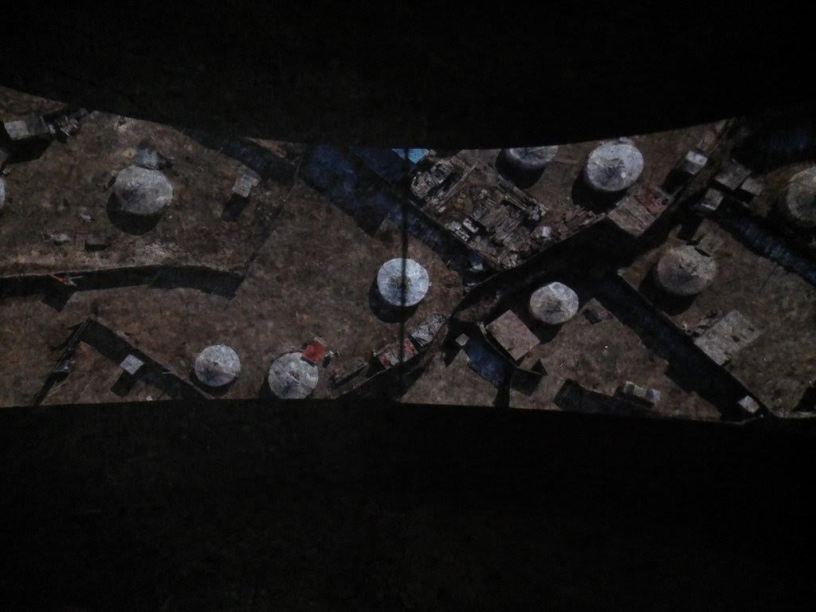
First project is the ‘City of Nomads,’ by Urban Rural Framework. It shows through two video-installations of how the Mongolian population began to mass-migrate from rural parts of the country to urban ones since 1989, which marked the fall of Soviet Union, and began living in huts or ‘gers,’ as they call them on the outskirts of cities. This poses a challenge, in a way that Mongolia lacks certain infrastructure and basic facilities to support these nomadic dwellings.
Second installation is called, ‘The Pan-European Living Room,’ which is a reaction to the events, that transpired during summer 2016, when UK voted to leave the European Union. Through the means of this installation, a Dutch design studio OMA/AMO wanted to pay homage to Britain’s and European Union’s unity ad remind how ‘dependent’ in a way, Britons are on European imports. It showcases mid-century design classics, like Castiglione’s Arco Lamp and IKEA’s furniture.
The next project is called, ‘Room Tone,’ by Hussein Chalayan, who contemplates on the fast-paced lifestyle of megapolises, such as London. Collaborating with micro-chip developer company, Intel, Chalayan has developed two wearable devices, which can reveal a person’s mental state. A pair of sunglasses that measures brain waves, respiration and heart rate through sensors. This indicates the stress levels a person has, which later transmits via Bluetooth to another wearable device – a belt, which projects an image representing that mental state to the world. In this way, the designer aimed to bring our emotional states into the public discussion.
Another installation by Kenya Hara (art-director of Muji brand), called ‘Staples,’ is regarding the excessive consumption levels of our society. He proposes that we should take note about many grains that are cultivated in Asia, in order to make our consumption more ecological and plant-based. Hara refers to the relationship of consumption and design, from systems of cultivation and distribution, the raw materials and packaged products.
Next installation, or rather, an object, in this case, is called ‘Mimus,’ by a designer called Madeleine Gannon. It alludes to people’s fear of technological coup d’etat, and how it may affect our lives; how it is already, affecting our lives. Gannon, on the other hands, adopts an optimistic approach to robots and their prowess, and claims that we should re-define our relationship with technology, by showing the robot, namely, ‘Mimus,’ and her ability to notice people (through programming), which can focus on one, and then move to the other person, when she becomes ‘bored.’ This project reminded me of Spike Jonze’s film, ‘Her,’ where the protagonist develops a romantic relationship with a computer system.
Finally, the project called ’empathy.goal,’ by Metahaven, dwells on the protection of our species, namely, mammals, e.g. dolphins and whales, which are being illegally killed every year, yet people tend to worry about artificial intelligence, when said mammals are known to be intelligent, as well. His multi-media piece, is a reflection on that encourages us to be more empathetic.
 Alma libera